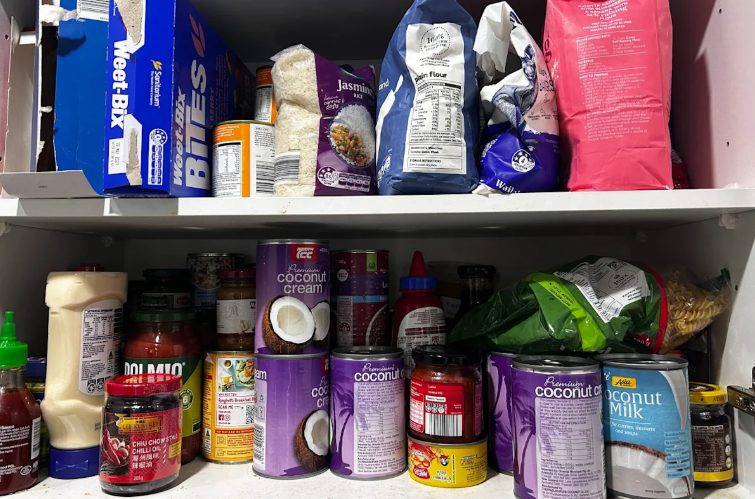
Major US retailers including Walmart, Costco and Tractor Supply have reported growing demand for survival essentials as concerns about the reliability of critical infrastructure spread across social media.
Walmart revealed this week that shoppers were purchasing increasing quantities of propane, bottled water and camping equipment, while Costco reported stronger sales of canned goods, rice and other long-life food products.
Tractor Supply said demand for generators, liquid storage tanks and propane accessories was also increasing, with emergency preparedness products outperforming other merchandise categories for the first time.
According to RBC Capital Markets analyst Nik Modi, a combination of government preparedness campaigns, social media speculation and recent technology failures has pushed so-called doomsday prepping into mainstream consumer behaviour.
Modi traced the latest wave of anxiety to a Pentagon military readiness directive issued in September, which was misinterpreted online and subsequently promoted on TikTok as evidence of an impending 90-day blackout.
Emergency preparedness campaigns in countries including Britain, Germany, Norway and Japan have added to the concerns, despite being intended to encourage households to prepare for conventional emergencies.
“Social media spread the message globally,” Modi said.
The growing unease comes amid a series of major technology disruptions that have affected businesses, financial institutions, airlines and government agencies.
Microsoft recently experienced a worldwide outage affecting Outlook and other productivity services, caused by a software bug that had reportedly gone undetected since July.
A separate technical failure grounded aircraft across the United States, while JPMorgan Chase customers experienced difficulties transferring money.
Apple also suffered service disruptions following a software update, while a classified communications network operated by the US National Security Agency was knocked offline.
Although authorities have stressed that the incidents were unrelated and there was no evidence of coordinated hostile activity, the succession of failures has heightened concerns about the vulnerability of increasingly interconnected digital systems.
Artificial intelligence is adding another dimension to the anxiety.
A Quinnipiac University poll released in September found that 73% of Americans were concerned that future AI systems could pose an existential threat to humanity.
Cybersecurity experts have also warned that AI-powered tools are accelerating the discovery of software vulnerabilities, forcing companies to deploy security updates more frequently.
Some analysts believe the rush to patch vulnerabilities may itself be contributing to technology disruptions, as organisations introduce changes to complex systems without sufficient testing.
The result is growing public concern about the potential consequences of a major cyberattack or prolonged failure of essential infrastructure, including electricity networks, banking systems and telecommunications.
Retailers are already benefiting from the shift in consumer behaviour, particularly in categories such as long-life food, emergency power equipment and household supplies.
However, Modi said the current increase in purchasing remained relatively modest compared with the widespread panic buying experienced during the Covid-19 pandemic.
He warned that a major geopolitical incident, cyberattack targeting critical infrastructure or more urgent government warnings could rapidly accelerate demand.
Such an event could transform gradual household stockpiling into widespread panic buying within days.
For retailers, the trend represents an emerging sales opportunity. For governments and technology companies, it highlights growing public anxiety about the resilience of the digital infrastructure on which modern society increasingly depends.