Welcome back to Neural Notes , a weekly column where I look at how AI is affecting Australia. This week: Trump’s promised “One Rule” executive order and direct consequences for Australian startups navigating a tightening copyright and safety landscape.
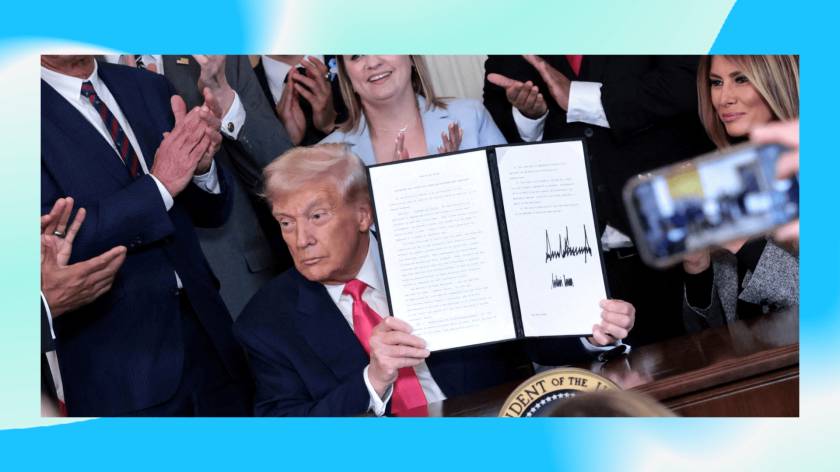
Earlier this week , US President Donald Trump said he will sign an executive order to block US states from enforcing their own AI laws, declaring there must be “One Rulebook” governing the technology.
Related Article Block Placeholder Article ID: 303325
Neural Notes: Industry weighs in on government’s plan for AI regulation
At the time of writing, the order is yet to drop, but a leaked draft shows the order could create an AI Litigation Task Force to challenge state laws in court, direct agencies to evaluate state-level rules deemed onerous, and push regulators like the FCC and FTC toward national standards.
It would also reportedly give White House “AI czar” David Sacks significant policymaking authority, bypassing the usual Office of Science and Technology Policy (OSTP) structure.
Why US states are pushing ahead on AI laws
Trump’s urgency is not appearing in a vacuum. Over the past 18 months, some US states have moved to legislate where Congress hasn’t.
Smarter business news. Straight to your inbox.
For startup founders, small businesses and leaders. Build sharper instincts and better strategy by learning from Australia’s smartest business minds. Sign up for free.
By continuing, you agree to our Terms & Conditions and Privacy Policy .
California’s SB 53 would require disclosures from developers of powerful AI systems. Tennessee’s ELVIS Act protects musicians and performers from AI-generated voice deepfakes. Colorado has also introduced stringent algorithmic accountability requirements.
And a coalition of more than 35 US state attorneys general has been pushing for the ability to regulate AI scams and impersonation tools directly, citing the risk of “disastrous consequences” if state power is removed.
Tech companies, however, have launched a sustained lobbying campaign arguing that 50 different regulatory regimes will “kill innovation” and undermine the US’ competitive edge.
That pressure is visible across Silicon Valley. OpenAI’s Greg Brockman, Nvidia CEO Jensen Huang, and investors have publicly advocated for federal preemption. Trump’s proposed order is the most explicit attempt yet to deliver on that agenda.
The complication for tech lobbyists is that state-level resistance now includes Republicans who are normally aligned with deregulation.
The Governor of Florida Ron DeSantis has warned that AI systems are job killers and major energy drains, and that stripping states of power constitutes federal overreach.
Related Article Block Placeholder Article ID: 325254
Neural Notes: Eight books you should read to really understand AI
Florida Senator Marco Rubio and Georgia Representative Marjorie Taylor Greene have made similar statements, arguing local governments must be able to protect communities from technology-driven harms. The Senate’s 99–1 rejection of Ted Cruz’s proposed 10-year AI moratorium also shows how deeply unpopular the idea of shutting states out has become, even amongst Republicans.
Meanwhile, the regulatory pressure isn’t just coming from governments. Copyright litigation in the US is accelerating rapidly. The New York Times is suing Perplexity AI for mass copying, trademark misuse and fabricating articles attributed to the paper. Dow Jones, New York Post , Forbes , Wired , Chicago Tribune , Merriam-Webster and Britannica have all filed suits alleging systematic scraping and unauthorised reproduction.
Reddit is suing multiple companies, including Perplexity , for illegally scraping user data. Amazon is suing Perplexity for allegedly impersonating customer accounts. Authors and comedians have had lawsuits against Meta and OpenAI. And in Europe, the breakthrough GEMA ruling in Ger many has already found OpenAI in breach of copyright for using songs without consent, offering a legal clarity that the US still lacks.
This is the environment US states are legislating in. And it’s the environment Australia is making decisions in, too.
Why Australia can’t afford to ignore the US shift
Related Article Block Placeholder Article ID: 328096
Neural Notes: Why Germany’s landmark AI copyright case is a warning for Australian companies
Australian AI companies are already contending with a tightening copyright environment. The government has ruled out US-style fair use exemptions, the Attorney-General’s Department is working toward a licensing and transparency framework, and the Tech Council of Australia has repeatedly warned that uncertainty around data rights is affecting investment and commercialisation.
Businesses are now weighing how to build products that remain compliant while competitors in other jurisdictions face fewer constraints.
The US moving to a single, industry-shaped federal rulebook would escalate this tension. It would make the US a far more permissive jurisdiction than Australia at precisely the moment local regulators are tightening expectations.
That creates a competitive imbalance: access to abundant training data in the US versus a compliance-heavy environment here. Talent and research capital will inevitably follow the path of least resistance. A path that was already attractive for Australian startups due to customer and investment opportunities in the US.
Australia’s Nati onal AI Plan has also finally put markers on the table. It outlines a licensing-leaning copyright direction, commits to a safety institute, and reinforces reliance on existing laws.
But the pressure points remain. The plan still depends heavily on voluntary guardrails and future consultations. At the same time, the US is potentially positioning itself as one of the most permissive AI jurisdictions in the world. That divergence creates a genuine competitive tension for Australian companies that must meet higher data and compliance expectations while rivals in the US face far fewer constraints.
The innovation argument matters. AI companies will go where it is easiest and fastest to build. But so do the risks that come with more lax environments, including unlicensed training, opaque models, avoidable safety failures and creators left unpaid.
Australia is trying to steer a middle path between safety and commercial ambition, yet without firm rules on data rights, liability and model behaviour, the country risks being both over exposed and under competitive.
Never miss a story: sign up to SmartCompany’s free daily newsletter and find our best stories on LinkedIn .
A multi-award-winning journalist, Tegan has been reporting on technology, telecommunications and gaming for the past 10 years. She regularly appears on mainstream media channels as an expert tech commentator. Her previous roles include editor of Gizmodo Australia and global reviews editor at Finder. She has also served as a reporter and editor across Business Insider, Lifehacker and Kotaku Australia. Tegan is also the co-host of one of the top technology podcasts in Australia, Weird Tech. You can find her on Twitter @Tegan_Writes.
artificial intelligence
Recommended for you
Neural Notes: What Trump’s Stargate AI plan could mean for Australia
Tegan Jones Jan 24, 2025
Neural Notes: Australian AI startups may face the same defence dilemma as OpenAI, Anthropic
Tegan Jones Mar 5, 2026
Neural Notes: AI winners and losers in the 2024 US election
Tegan Jones Nov 8, 2024