
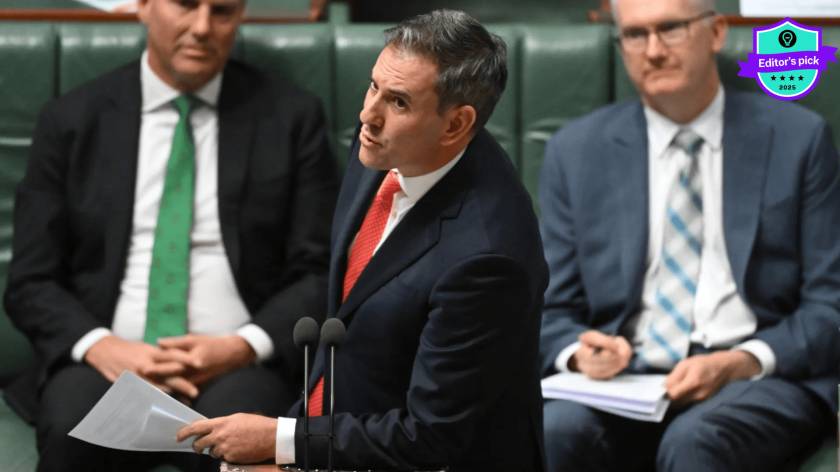
Australian employers will soon be required to pay superannuation entitlements for their staff on the same day as their wages, after legislation to enact the federal government’s payday super reforms passed the Senate on Wednesday.
Related Article Block Placeholder Article ID: 324194
The ATO is shutting down the free superannuation clearing house for SMEs. Here’s what you should do
The change will come into effect on July 1, 2026, giving employers eight months to adjust to paying compulsory superannuation guarantee payments with each pay cycle.
After that time, all Australian employers will need to pay their employees’ superannuation guarantee (SG), now set at 12%, on the same day as their regular wages, whether that is monthly, fortnightly, or weekly.
The new system will replace the current quarterly payment method.
Employers that do not pay super on payday could face significant penalties worth 60% of the shortfall , along with daily interest if super payments are not received within seven days.
Smarter business news. Straight to your inbox.
For startup founders, small businesses and leaders. Build sharper instincts and better strategy by learning from Australia’s smartest business minds. Sign up for free.
By continuing, you agree to our Terms & Conditions and Privacy Policy .
Payday super has long been part of the government’s agenda, and its introduction will coincide with the closure of the Australian Taxation Office’s Small Business Superannuation Clearing House (SBSCH), also happening on July 1, 2026.
Faster SG payment times, along with immediate financial penalties on any delayed payments, are designed to boost employer compliance and address the ongoing challenge of underpayments in some parts of the economy.
Related Article Block Placeholder Article ID: 324836
Payday super: ATO won’t slam SMEs doing their best in “period of chaos”
On Wednesday, Treasurer Jim Chalmers and Assistant Treasurer Daniel Mulino said the new system will “benefit the retirement incomes of millions of Australians”.
“Employees will benefit from more frequent and earlier super contributions that will grow and compound over their working life,” they said in a joint statement.
Concerns over timing, penalties for small businesses
However, leading accounting bodies and the Council of Small Business Organisations Australia (COBOA) have previously urged the government to delay the reforms, or introduce them for larger employers first, amid concerns that smaller businesses will need more time to update and test their payroll systems.
The groups were also concerned that employers may be penalised for late payments that are caused by third-party clearing houses, payment gateways and even super funds themselves.
However, the Australian Taxation Office (ATO) indicated in October that it won’t issue harsh penalties to employers in cases where payment delays are not caused by the business itself.
Draft guidance published by the ATO, which is intended to cover the period from July 1, 2026, to June 30, 2027, inclusive, refers to a three-tier risk system.
Businesses that act quickly to identify and fix mistakes related to superannuation payments would be considered ‘low risk’, and therefore least likely to face an ATO investigation.
Businesses that miss a super guarantee payment on payday, but are able to rectify the shortfall within 28 days after the end of the quarter in which payment should have been made, would be classified as ‘medium risk’.
The ‘high risk’ tier would apply to businesses that have outstanding super guarantee payments outside of this 28-day window.
Tech platforms that are used by SMEs are also responding to the change, including Employment Hero, which is partnering with Zepto and OZEDI to launch a new product that embeds super clearing directly into Employment Hero’s payroll function.
On Wednesday, Employment Hero CEO Ben Thompson said SMEs will be expected to “get payday super right from the outset”, despite parts of the ecosystem around employer superannuation payments still being upgraded and the SBSCH closing.
“That’s a big ask, especially when you consider the 60% increase in admin overheads and $124,000 cash flow impact the average SMB will face on day one,” he said in comments provided to SmartCompany .
Employment Hero’s new product, called HelloClear, is pitched as an end-to-end, automated workflow that will eliminate the need for separate systems, clearing houses, payments portals and manual uploads.
“By validating fund details up-front, moving money in real-time, and providing live confirmations and a single audit trail, SMBs will see fewer errors, faster settlement and clear proof of action to meet new requirements. That means better outcomes for business and employees alike,” Thompson added.
Never miss a story: sign up to SmartCompany’s free daily newsletter and find our best stories on LinkedIn .
Eloise is an experienced business journalist and editor, who has held senior editorial roles at SmartCompany since 2014. Prior to joining SmartCompany, Eloise was news editor at Books+Publishing, the trade press for the Australian book industry. Eloise has degrees in media and communications, marketing and business management, and political science. You can follow her on LinkedIn, and Twitter at @ellykeating.
payday superannuation
Recommended for you
New 60% penalty in draft payday superannuation legislation
David Adams Mar 17, 2025
New ATO checklist warns small businesses to prepare for looming payday super
David Adams Jan 28, 2026
David Adams Oct 10, 2025